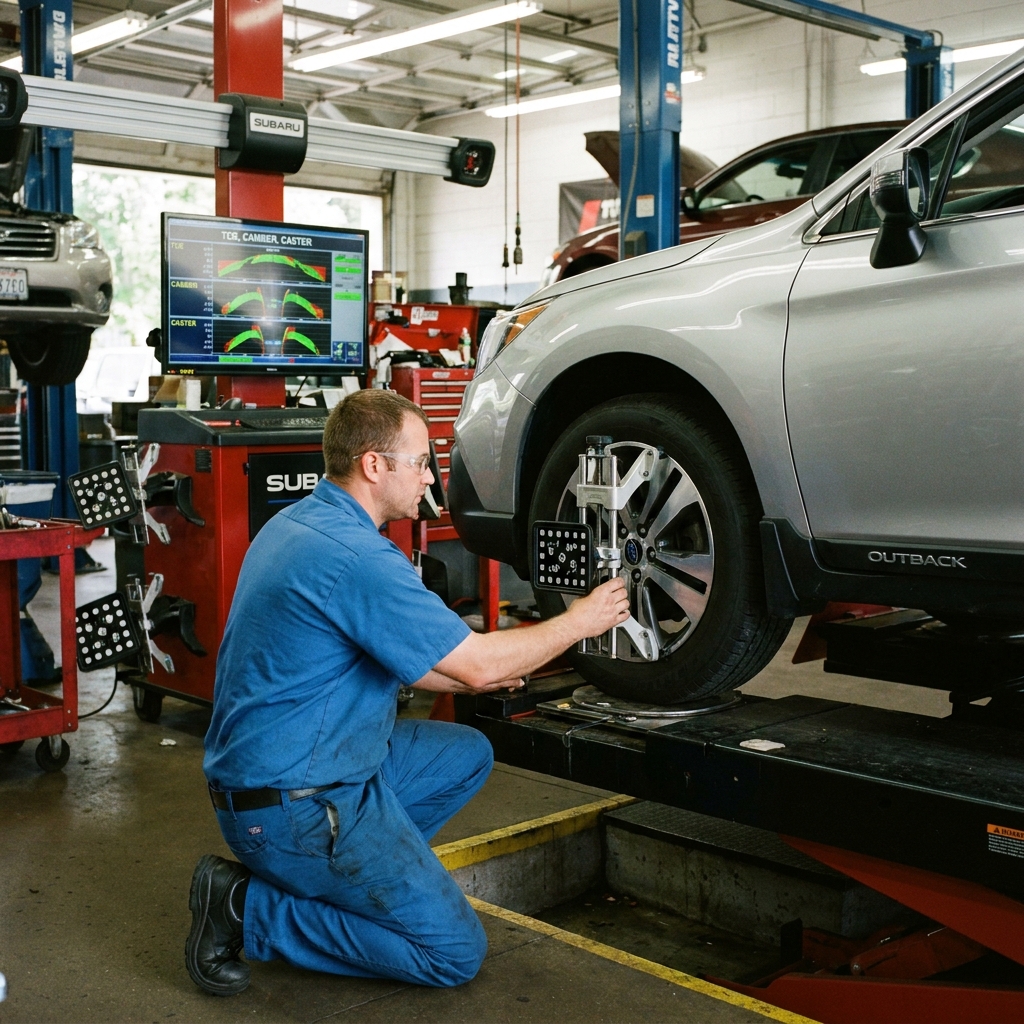

A car that shakes at highway speeds may have an unbalanced tire and wheel assembly, tire damage, a bent wheel, or worn steering and suspension components. The speed at which the shaking begins is useful information, but it does not identify the failed part by itself.
You might first notice the problem when entering I-5 near Mission Viejo. The car feels reasonably smooth around town, then vibration develops through the steering wheel, seat, or floor. Rather than assuming the vehicle needs an alignment, pay attention to the conditions and arrange an inspection.
Wheel Imbalance Is One Possible Cause
A tire and wheel assembly must distribute its weight evenly as it rotates. Small differences are corrected with balancing weights when the tire is mounted.
If the assembly is out of balance, vibration may become noticeable within a particular speed range. A missing weight, changes in tread wear, or recent tire removal and remounting can make a balance check appropriate.
Balancing can correct uneven weight distribution. It cannot restore a damaged tire or straighten a bent wheel. If the vibration remains after balancing, the inspection needs to consider other causes instead of repeatedly adding weights.
Tire and Wheel Damage Can Feel Similar
An impact with a curb or pothole can damage a wheel or tire. Some damage is visible, but other problems are hidden from an outside inspection.
A vibration that begins suddenly after an impact is especially useful information to share with the technician. Mention any new pressure loss, thumping, or change in steering at the same time.
Once safely parked away from traffic, look for obvious concerns such as:
- A bulge in a tire sidewall
- A visibly low tire
- Cuts or exposed internal material
- Damage around the wheel rim
- An unusual shape or distortion in the tread
Do not drive on a tire with a bulge or clear structural damage. Arrange assistance or use an appropriate spare according to the vehicle manufacturer's instructions. Do not crawl underneath the vehicle or inspect a traffic-facing wheel on a freeway shoulder.
Why Alignment and Balancing Are Different
Balancing corrects the weight distribution of the rotating assembly. Alignment adjusts wheel angles in relation to the vehicle.
Pulling on a reasonably level road, an off-center steering wheel, or wear concentrated along a tread edge may justify checking the alignment. These symptoms are different from a vibration that appears mainly at a certain speed.
A wheel alignment may be part of the solution when the measured angles are outside specification, but it is not an automatic cure for shaking. The tire, wheel, and supporting components should be evaluated before deciding what service is needed.
Steering and Suspension Wear May Contribute
The steering and suspension help control wheel movement and maintain consistent tire contact. Wear or looseness can contribute to shaking, instability, and irregular tread wear.
Notice whether the vibration comes with clunks over bumps, wandering steering, or excessive bouncing. Those details may support the need for a steering and suspension inspection.
Where you feel the shaking can help guide testing, but it is not definitive. A steering-wheel vibration does not prove that only the front tires are involved, and a vibration through the seat does not automatically identify a rear tire.
Does the Car Shake While Cruising, Braking, or Accelerating?
The conditions matter as much as the speed.
While cruising: A vibration at a steady road speed can point toward tire or wheel concerns, although other rotating components may also be involved.
While braking: Shaking that begins or becomes much stronger when the brake pedal is pressed calls for evaluation of the braking system and related components.
While accelerating: A vibration that changes with engine load may require checks beyond the tires, including the drivetrain or engine operation.
While stopped: If the vehicle also shakes at idle, a tire imbalance cannot explain that stationary symptom.
Share what you have already noticed. Do not deliberately accelerate to reproduce severe shaking or use a phone to record symptoms while driving.
What to Do When Vibration Starts on the Freeway
Keep both hands on the wheel, avoid abrupt steering or braking, and reduce speed smoothly when traffic conditions allow.
If the vibration is sudden, severe, or accompanied by thumping, pulling, pressure loss, or difficulty controlling the vehicle, move to a safe place and arrange assistance. A tire or wheel problem can become more serious if the vehicle continues at speed.
For a mild but recurring vibration, arrange an inspection promptly and avoid unnecessary freeway travel until the cause is assessed. A shake that disappears at a lower speed has not necessarily resolved.
Frequently Asked Questions
Can a tire pressure warning tell me whether a wheel is unbalanced?
No. A tire pressure monitoring system monitors inflation conditions, not wheel balance. You can have a vibration without a pressure warning.
Can tire rotation change where I feel a vibration?
Yes. Moving a wheel and tire assembly to another position can change how its vibration is transmitted through the vehicle. Rotation does not itself correct an imbalance.
Why does the shaking seem worse on certain roads?
Road texture and surface irregularities can change how a vibration feels. If the symptom repeatedly appears on smooth roads too, mention that distinction during the inspection.
Do new tires guarantee a smooth ride?
No. New tires still need correct mounting and balancing. Existing wheel damage, suspension wear, or another vehicle problem can also remain after tire replacement.
Get Highway Vibration Checked in Mission Viejo
Bymar Tire and Brake can evaluate tire, wheel, and suspension concerns to help identify why your vehicle is shaking. Contact our Mission Viejo tire and auto repair shop to arrange an inspection before your next freeway commute.